

- This event has passed.
Health Care in the Dark: The Human Cost of Russia’s Attacks on Ukraine’s Energy Infrastructure
25 March - 12:00 - 13:00
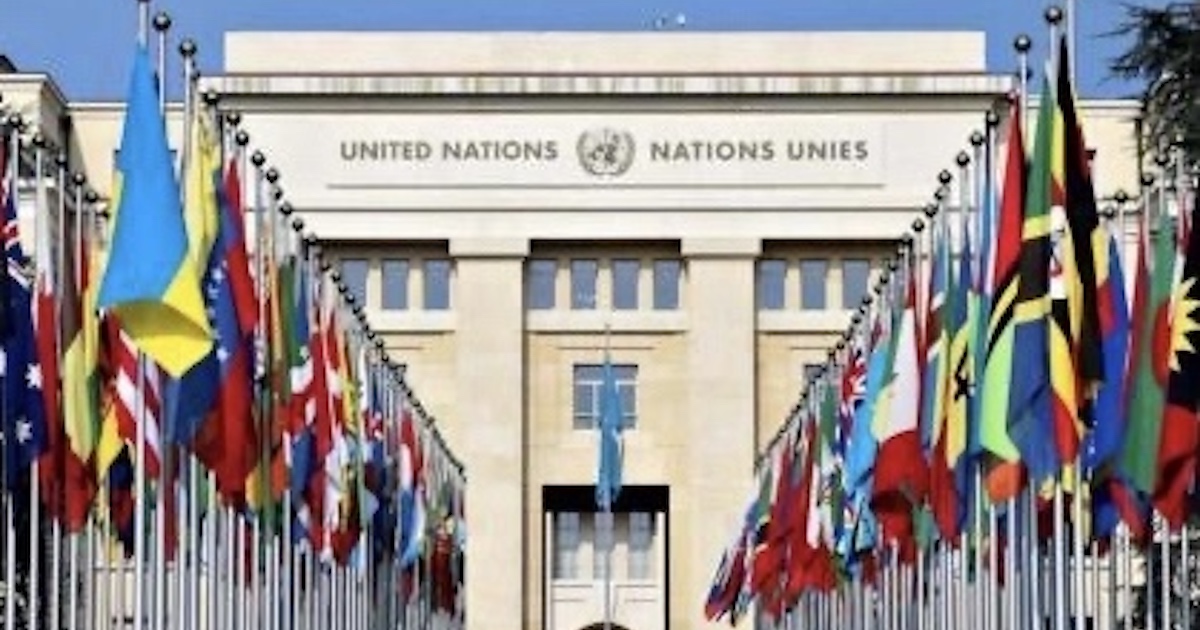
Side Event on the margins of the 61st Session of the UN Human Rights Council Conference Room Concordia I, Palais des Nations, Geneva
25 March 2026 │ 12:00 – 13:00 CET
– Live streaming on YouTube: https://youtube.com/live/RNwO74JW8Z4
– Co-Sponsored by: Permanent Missions to the UN Geneva of Ukraine, Czech Republic, Estonia, Finland, Latvia, Moldova, Montenegro and Netherlands
– Organised by: No Peace Without Justice (NPWJ) and Truth Hounds, in cooperation with Physicians for Human Rights (PHR)
– Flyer
– Concept note
Russia’s systematic attacks on Ukraine’s energy infrastructure are not an incidental consequence of military operations. They are a deliberate policy directed at the conditions under which civilians live, access care, and sustain community life. The responsibility of the Russian Federation is a matter of international law — and the pattern of conduct raises serious questions under international criminal law, including as potential crimes against humanity under Article 7 of the Rome ICC Statute.
The consequences are visible at both the institutional and individual level. Hospital directors and municipal authorities have restructured services, rationed backup power, and made triage decisions driven by electricity availability. The medical risks of these attacks were widely known and publicly documented as strikes continued — speaking directly to the foreseeability required under international criminal law. Older people, people with chronic illness, patients dependent on dialysis or respiratory support, children and persons with disabilities are identifiable individuals whose rights are being violated in documented, recurring ways, yet whose situation remains largely absent from the evidentiary record.
This side event draws on Truth Hounds’ and PHR’s research to show how attacks on civilian infrastructure translate into measurable health harm, falling disproportionately on those least able to bear it. A practitioner with direct experience of systematic power disruption will ground the discussion in operational reality, before turning to what the international community — including UN human rights mechanisms and the ICC — is required to do. Three interconnected concerns frame the discussion:
• The deliberate targeting of energy infrastructure serving civilian populations violates international humanitarian law and may constitute war crimes and crimes against humanity. These health consequences must be prosecuted accordingly — not absorbed into humanitarian frameworks that treat them as if they were unavoidable natural disasters.
• Sentinel populations — older people, people with disabilities, and patients dependent on electricity-reliant care — bear a disproportionate burden of harm that existing casualty methodologies fail to capture. Closing this evidentiary gap is a precondition for accountability.
• Urgent international action is required, through UN human rights mechanisms and the ICC, to ensure justice for survivors and prevent further impunity.
This crisis demands coordinated diplomatic, legal, and operational responses. Silence and inaction are not neutral: they entrench the impunity that makes these attacks possible.
Preliminary Draft Agenda
12:00 – 12:05 Opening Remarks
Roman Toder, Deputy Permanent Representative of Ukraine
12:05 – 12:45 Panel Presentations
· Evan Harary, Truth Hounds
· Lesia Lysytsia, Okhmatdyt Hospital Kyiv
· Uliana Poltavets, Physicians for Human Rights
12:45 – 12:55 Interactive Dialogue & Q&A
Moderated by Niccolò Figà Talamanca, No Peace Without Justice
12:55 – 13:00 Conclusions