Rome, Friday 11 September 2026
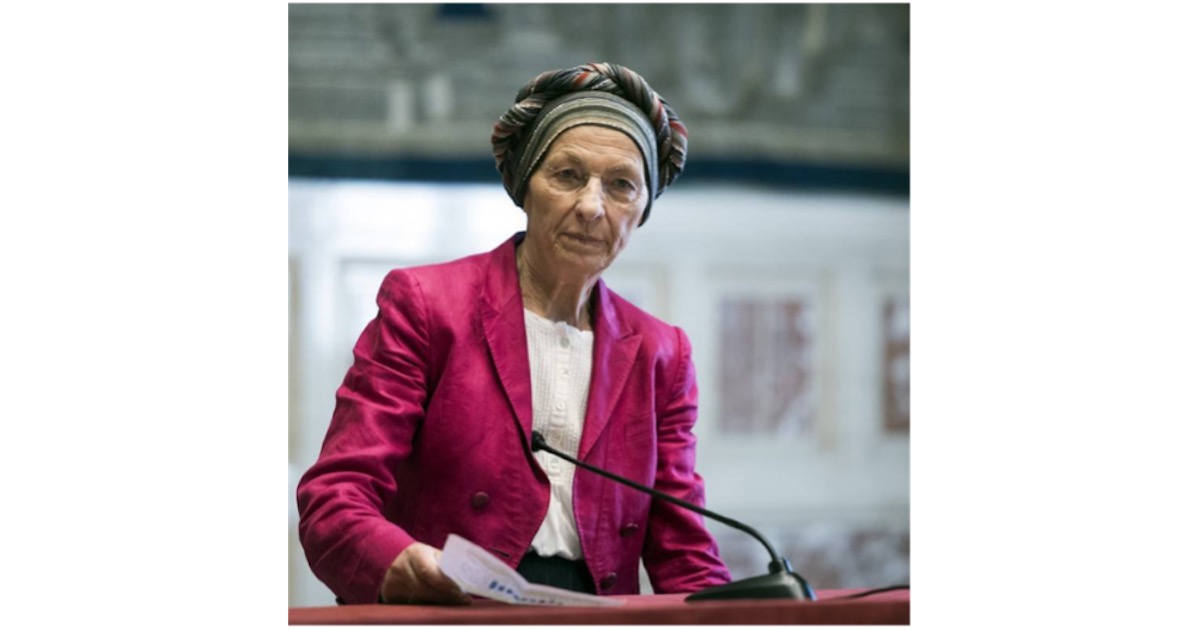
Today No Peace Without Justice mourns the passing and honours the life of its founder, former EU Commissioner and Minister of Foreign Affairs Emma Bonino.
For half a century, Emma Bonino was a committed human rights advocate, both as an everyday citizen and as an elected official. Italy has lost the voice of its civil liberties and women’s rights generation. Europe has lost one of its last committed federalists, for whom a united Europe was a political and human rights project, as much as an economic one. The world has lost one of those most responsible for turning human rights from proclaimed ideals into enforceable claims.
Through her life and her political and institutional activism what we gained is no less concrete: where thirty years ago international justice was only an ideal, we gained the two ad hoc Tribunals for the Former Yugoslavia and Rwanda and a permanent International Criminal Court; a United Nations moratorium on the death penalty; in Italy we gained more than changed laws, we gained changed lives; and, through the campaigns against female genital mutilation and for the Maputo Protocol, a generation of local leaders equipped to carry the same fight forward in Africa and the Middle East. And in us, and others, organisations and structures built to keep doing the work now that she cannot.
I write this as the Secretary-General of the organisation she founded, and as somebody honoured to have called her a friend for many years. No Peace Without Justice exists because Emma Bonino and Marco Pannella decided, in 1993, that a Transnational Radical Party campaign for international justice needed a permanent home, and people who would not tire of making the argument before governments eventually came round to it. The organisation was established in May 1994.
Everything NPWJ has done since, from the initial five year struggle leading to the 1998 Rome Conference establishing the International Criminal Court, to our 2026 campaign on child marriage, and everything in between, from Afghanistan to Zimbabwe, from Kosovo to Syria, carries her dogged insistence that justice is not a reward States hand out when convenient, but a right that people are entitled to claim.
Her activism did not begin with international justice, and it never confined itself there. In the 1970s she fought, with her Radical Party colleagues, the battles over divorce and abortion that redrew what Italian civil rights law would permit; the fight cost her a criminal prosecution before it won her a change in the law, which is the sequence her whole career would repeat. In 1982, she created Italian Parliamentarians Against Hunger, a campaign that produced a tenfold increase in Italy’s development assistance and showed her a method she never abandoned: turn moral urgency into a specific institutional demand, then hold parliamentarians to it by name. In Italy, she and Marco Pannella taught a generation to play the possible against the probable, and to trust that persistence, not just conviction, moves the line between them.
As European Commissioner for Humanitarian Aid from 1995, she ran ECHO through the Balkan wars; her repeated alarm calls on the massacres at Srebrenica, and later the deportations from Kosovo, forced Brussels to treat the Balkans as a political emergency, not only a humanitarian one. That same decade, she put her authority behind the negotiations that produced the Rome Statute in 1998. The Court that resulted is not hers alone, but NPWJ’s role at the Rome Conference existed because she had built the campaign infrastructure that made it possible for civil society organisations like ours to contribute to changing the course of history.
She went on to lead the “Stop FGM” campaign and, in 1998, after having been detained in Kabul by the Taliban the previous year, “A Flower for the Women of Kabul,” one of the first international actions to put the Taliban’s treatment of women onto governments’ agendas rather than leaving it to advocacy alone. In 2007 she was among those who pushed through the UN General Assembly resolution for a universal moratorium on the death penalty, a text NPWJ had campaigned for since the organisation’s earliest years.
In January 2004, when her role as Italian Foreign Minister was still some years off, she led NPWJ to organise the Sana’a Conference with the Yemeni Government, the first meeting to bring Arab governments and civil society together to discuss democracy, human rights and the ICC on the same agenda. When she became Italy’s Foreign Minister in 2013, the causes did not change; only her tools did.
None of this reads, in retrospect, as a career. It reads as one continuous argument, conducted in parliaments, in Brussels, in Cairo, in Sana’a, at the helm of a Ministry, and in the corridors of the United Nations, and as an activist marching on the streets, that rights are not concluded by treaty but sustained by people willing to keep making the case after the treaty is signed. She made that case for justice through NPWJ for over thirty years, and she made it long before NPWJ existed and with NPWJ at her side until a few years ago.
We do not have the option of grieving her by pausing. The organisation she founded will keep documenting the violations, making the argument and pressing the governments she spent her life pressing, because that is what she asked of everyone who worked alongside her, not what she asked of herself alone.
She will live in that work, and fight in it, for as long as we do it as she taught us to: universal rights are claims to be enforced, not causes to be admired; steadfast, in it for the long haul, and with zero patience for the theory that justice can wait its turn. It can’t, and we won’t.
Niccolò Figà-Talamanca
Secretary-General, No Peace Without Justice